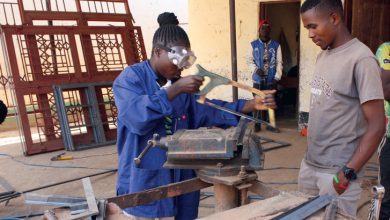
In a journey that has spanned nearly four decades, Emmanuel International (EI) has brought hope and empowerment to thousands of rural households in Malawi.
The non-profit organisation’s commitment appears relentless as it celebrates 38 years of service, which ranges from providing clean water to promoting self-reliance through village savings and loan schemes.
EI works in 16 districts across the country, implementing numerous projects funded by various donors.
These initiatives have not only enhanced healthcare delivery or empowered women and the youth but also strengthened food security and disaster resilience.
In Labani Village, Traditional Authority (T/A) Chilipa in Mangochi District, access to clean water was once a distant dream.
For years, women walked more than five kilometres to fetch dirty water from Ntosa River. Thanks to EI, that dream is a reality not only for Labani but for thousands of Malawians.

“Our mission is built on the understanding that development is sustainable only if it’s driven by the local community,” says EI head of administration Brereton Mitambo. “Our focus on capacity-building and community empowerment has enabled rural Malawians to take ownership of their development, leading to lasting impact.”
This approach prioritizes community involvement and grassroots initiatives.
For instance, the village savings and loan schemes have transformed rural economies, giving rise to self-sustaining businesses.
The groups resemble urban cooperatives, but are tailored to meet the unique needs of rural communities.
By providing training and resources, EI instils self-reliance, a sense of pride and ownership within these communities.
Collaboration lies at the heart of EI initiatives that contribute to the transformation of healthcare delivery, women and the youth empowerment as well as strengthening food security and disaster resilience.
“Our partnerships with donors, government agencies and local structures amplify our impact,” Together, we’ve changed thousands of lives,” says Mitambo.
For instance, Titukulane project, funded by the US Agency for International Development (USAid) supported over 5 000 women and the youth in Mangochi to establish thriving small businesses. This helped some familes send children to school, invest in their futures and uplift their communities.
EI also invests heavily in training and capacity-building.
Through internships and volunteer opportunities, EI identifies and fosters raw talent, particularly the youth often overlooked due to lack of experience.
Recently, EI published a booklet celebrating four years of success in women’s economic empowerment, youth skills development, food security and climate change adaptation under the Titukulane Project.
The success stories demonstrate the power of community-driven development to transform lives and inspire others to follow suit.
At this year’s NGO gala, EI received an award for the Best Community Empowerment Interventions from President Lazarus Chakwera.
Its country director Charles Mukiwa accepted the award in recognition of the organisation’s dedication to uplifting rural communities.
This accolade underscores EI’s commitment to sustainable development and its impactful work in empowering local populations.
Nicholas and Sofia Balazani, a couple from Ntanga Village, T/A Jalasi in Mangochi, say they have learnt new farming methods that have increased their maize harvest from 15 bags to 26-40 bags per acre, dramatically improving their food security.
“We used to harvest just enough for consumption, but now we have a surplus to sell,” says Nicholas. “The training we received through the Titukulane project has made a huge difference in our lives.”
Sofia adds: “Joining the village savings and loans association has also helped us manage our finances better. We make joint decisions on investments and have seen significant improvements in our financial status.”
The Balazanis’ profits have jumped from K530 000 in 2022 to K845 000 last year. During the period, their savings have risen from K175 000 to K215 000.
The couple has also built a new house, purchased additional land and started raising livestock.
“We are proud of what we have achieved,” says Nicholas. “We are now food-secure and our children are attending school.”
Mukiwa says EI remains committed to accelerating rural development.
He says: “We will continue to serve the country, helping to conquer food insecurity, supporting the health sector, agriculture, entrepreneurship, clean water and many more areas.
“We believe that together, we can help Malawi achieve its vision of becoming a prosperous nation by 2063.”